
A thought experiment in autonomous systems
The First Digital City: When AI Begins to Act
Something strange is happening in 2026. Technology is starting to feel a little like magic.
AI agents can use computers and tools to solve increasingly complex problems. Robots are learning to reason about the physical world. AI can create interactive worlds, help scientists design medicines and proteins, and increasingly connect intelligence to machines.
These aren't just science-fiction ideas anymore. They're engineering projects.
Put them together and something bigger starts to appear. We may be watching the beginning of a new industrial era—perhaps even the beginning of the true information age.
For thousands of years, information recorded the world. Computers let us process it. The internet let us move it around the planet.
Now something different is happening.
Information can act.
Software can make decisions. AI agents can pursue goals. Robots can turn digital decisions into physical actions. And increasingly, machines will communicate and coordinate with other machines.
That's where this gets really interesting.

David Ramirez
David Ramirez is a science, technology, and research writer who examines how artificial intelligence, robotics, data systems, and emerging forms of digital infrastructure shape everyday life. His work translates complex technical ideas into clear, grounded stories while keeping the uncertainty, evidence, and open questions in view.
“The future of AI is not only what machines can do, but how humans learn to question, test, and account for what they do.”
Imagine the First Digital City
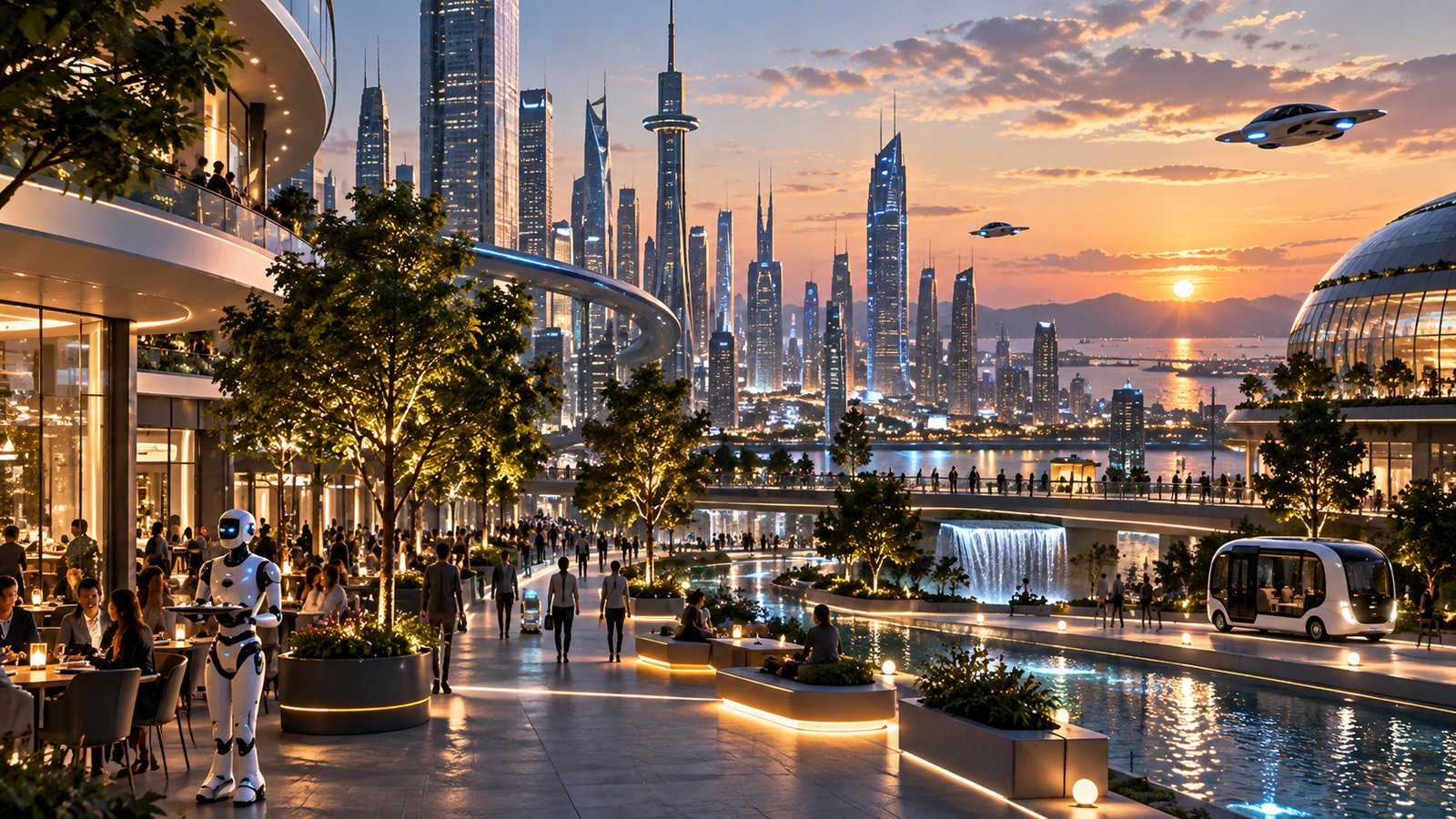
Imagine a robot needs a replacement part. Its AI finds another machine selling one. They identify each other, negotiate and transact. A factory makes the part. An autonomous vehicle delivers it. Another robot installs it.
Nobody opened a browser. Nobody clicked BUY.
The machines handled it.
Now imagine that happening millions—or eventually billions—of times.
Machines would need infrastructure of their own: identity, discovery, communication, commerce and, perhaps most importantly, trust.
Call it the first digital city.
It's a thought experiment. We're nowhere near that city. But we've begun experimenting with some of its primitive digital rails.
We're testing the first bricks.
And that leads to a much harder question.
Who Checks the Machines?
What happens when an intelligent machine is confidently wrong? Who checks it?
And who checks the machine checking the machine?
That's where another experiment enters the story.
It's called Arithmetic Assurance (AA). Around the lab, I call the research intelligence behind the experiment Bubi.
While the world's biggest AI laboratories are building machines that do, we're experimenting with specialized intelligence designed to question.
AI proposes. Bubi attacks. Evidence decides.
Not enough evidence?
UNKNOWN.
No pretending uncertainty is proof.
The bigger experiment is whether this specialized intelligence can learn from accumulated evidence and improve its investigations over time.
We're not trying to make Bubi good at everything. We're asking whether specialized security intelligence could someday become an independent assurance layer for a world filled with intelligent machines.
Perhaps an oracle of evidence—not an oracle of truth.
Its job is to keep asking one question:
AI Agents
Software entities that may pursue defined goals, exchange information, and recommend or initiate actions within carefully set boundaries.
Robotics & Autonomous Infrastructure
Physical machines and networked systems that could translate digital decisions into movement, maintenance, logistics, and operations.
Machine-to-Machine Commerce
A possible future in which systems request services, negotiate terms, and exchange value with limited moment-to-moment human involvement.
“UNKNOWN is not a failure of intelligence. It is the point at which every confident machine should face the human question: Can you prove it?”
ts job is to keep asking one question:
Can you prove it?
We don't know how far this experiment can go.
That's why we're running it.
Humanity emerged in Africa, spread across the Earth, reached the Moon and began pushing into space.
Now another frontier is appearing.
The agents are arriving. The robots are learning. The infrastructure is rising.
The first digital city is still a thought experiment.
But we've started experimenting with the first bricks.
And somewhere in our little lab, Bubi keeps asking:
Can you prove it?
The New World Waits.
Continue exploring David Ramirez’s accessible research writing on AI, robotics, assurance, and the technologies reshaping how cities think, move, and act.